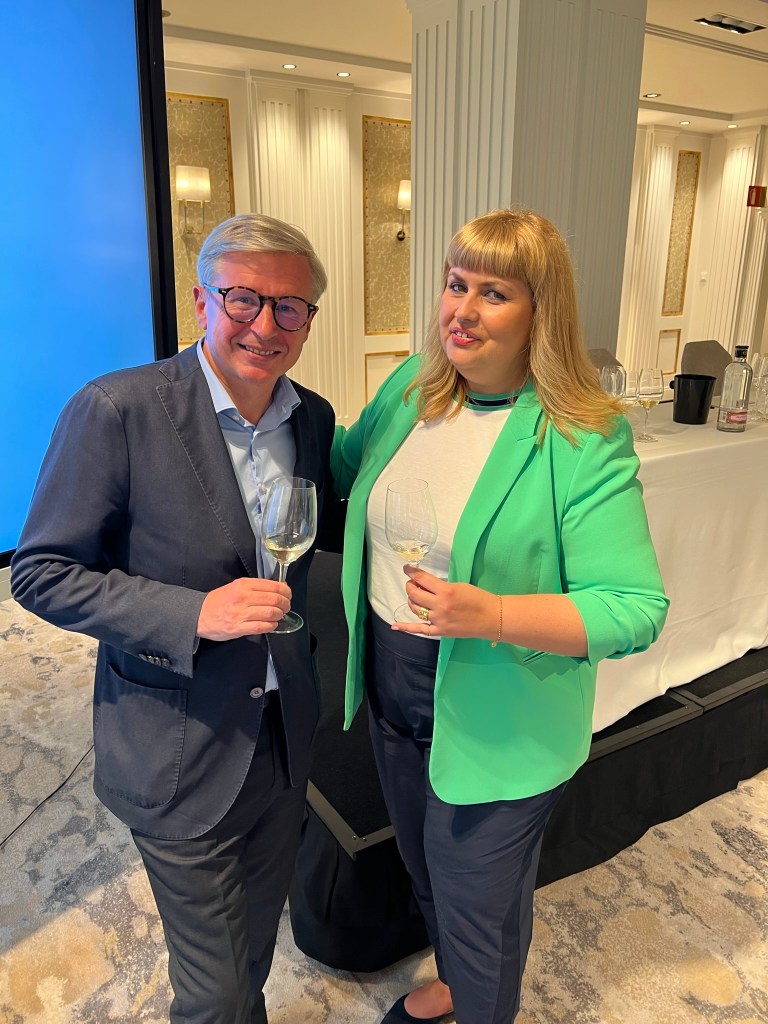
On June 5th, we had the wonderful opportunity to participate in a tasting experience like no other. Insolity Wines organized an extraordinary event hosted at the Four Seasons Hotel in Madrid, where we were able to taste all the cuvées from Louis Roederer’s “Collection” – a series of multi-vintages from the 21st century. The event was expertly presented by the one and only Jean-Baptiste Lécaillon, the talented Roederer’s chef de cave.
The “Collection” is an exceptional non-vintage series that has taken the place of the renowned Louis Roederer NV Brut. These cuvées are meticulously crafted blends, consisting of a specific base-year that forms the majority of the final cuvée. They also incorporate a well-preserved réserve perpétuelle* and a smaller percentage of wines from neighboring vintages. Furthermore, young Cristal vines, vinified in large French oak barrels (foudres), are also added to the blend.
The concept behind the “Collection” is to create a champagne each year that showcases the best qualities of the vintage while maintaining a complex and refined blend. Every vintage is unique and far from perfection, which is precisely where the genius of the chef de cave shines. Through skilful blending, Jean-Baptiste and his team, achieve a truly balanced and exceptional champagne.
In contrast to Moët&Chandon’s consistent Brut Impérial, which aims to deliver the same experience year after year**, Roederer now seeks to embrace the distinct character of each vintage in the most refined manner possible. This approach presents a significant challenge but seems to be a wise decision, especially considering the climate changes that also impact the Champagne region.
* similar aging process with Solera (Jerez – Sherry), but avoiding the oxidative process by using only one container (barrel or stainless steel vat), in contrary of the “criaderas” system used in Spanish Solera.
**in reality, Brut Impérial is slightly changing each 10 years


We had the privilege of sampling the initial seven iterations of the esteemed “Collection,” ranging from 238 to 244. Notably, iterations 238, 239, 240, and 241 were NEVER released to the market, as they were considered experimental and served as valuable learning experiences. Despite this, we found them to be exceptionally intriguing, particularly as Jean-Baptiste Lécaillon guided us through the meticulous process behind their creation.
During the tasting, Jean-Baptiste provided us with comprehensive insights into the exhaustive journey involved in crafting these unique iterations. It was fascinating to delve into the intricate details and understand the thought and effort put into each one, even if they didn’t make it to the market. This immersive experience allowed us to appreciate the artistry and dedication that goes into the development of the “Collection.”

Here are some technical data and our tasting impressions for the “Collection” 238-244:
- 238: base 2013 / deg. 09/10/2017. Pinot Noir dominant, 60% malolactic, RP*** 16%, dosage 9g/L. Tasting notes: very fresh, powerful, hints of maturity (chocolate, white truffle), iodine, strong acidity. Lack of texture.
- 239: base 2014 / deg. 11/10/2018. Pinot Noir dominant, 49% malolactic, RP 21%, dosage 8g/L. Tasting notes: excellent nose, reductive bouquet and oxydative notes at the same time. Creamy texture but too acidic/dry on the finish.
- 240: base 2015 / deg. 03/07/2019. Pinot Noir dominant (but with Chardonnay more present), 36% malolactic, RP 20%, dosage 8g/L. Tasting notes: very nice nose (toast, oak, brioche). Round with nice texture, complex. Powerful. Lacking elegance. Finish a bit short.
- 241: base 2016 / deg. 01/10/2020. Pinot Noir dominant (but with great Chardonnay presence), 30% malolactic, RP 34%, dosage 8g/L. Tasting notes: bouquet perfumed and intense, hazelnut, brioche. Fresh and vibrant, revealing nice texture. Long finish, elegant. A great cuvée!
- 242: base 2017 / deg. 03/02/2022. Chardonnay dominant, 34% malolactic, RP 34%, dosage 8g/L. Tasting notes: more aromatic with mature notes. Hazelnut, honey, smoky bouquet. Lovely texture, round. Long finish, savory and umami. Perfect!
- 243: base 2018 / deg. 19/12/2022. Chardonnay 42%, Pinot Noir 40%, Meunier 18%., 26% malolactic, RP 31%, dosage 8g/L. Tasting notes: Bouquet fresh, aromatic, a mix of lemon pie, jasmin, brioche. On palate is well structured, powerful, complex. Long elegant finish. Great!
- 244: base 2019 / deg. Jan/2023. Chardonnay dominant (41%), Pinot Noir 33%, Meunier 26%, 35% malolactic, RP 36%, dosage 7g/L. Tasting notes: Very elegant and profound on the nose, hints of peach, pear, lemon, orange. Great minerality. On palate it shows power and complexity, is long and textured. Great balance. Tiny bubbles and long finish. Excellent!
*** Réserve Perpétuelle


Jean-Baptiste Lécaillon eloquently presented the new philosophy embraced by the house, which is heavily influenced by the climate change and the imperative to adopt biodynamic practices. Notably, Louis Roederer holds the leadership among the big champagne producers boasting an impressive 40 hectares of organic vineyards, showcasing their commitment to sustainable viticulture.
By incorporating réserve perpétuelle wine into the blending process, Jean-Baptiste skillfully crafts an extraordinary non-vintage (or multi-vintage, as he prefers to call it) champagne each year. This approach ensures that even in years when the climate conditions are not suitable to producing a vintage champagne, the “Collection” still epitomizes excellence. It is a testament to Jean-Baptiste’s and his team expertise to create a complex blend that captures the essence of the vintage, without being a millésime, while maintaining remarkable consistency.
And yes, from now on we can talk about preferred iterations and it seams a good idea to start collecting them for future “vertical” tastings.

 Champagne LoungeBar
Maravillosa experiencia!
LikeLike